
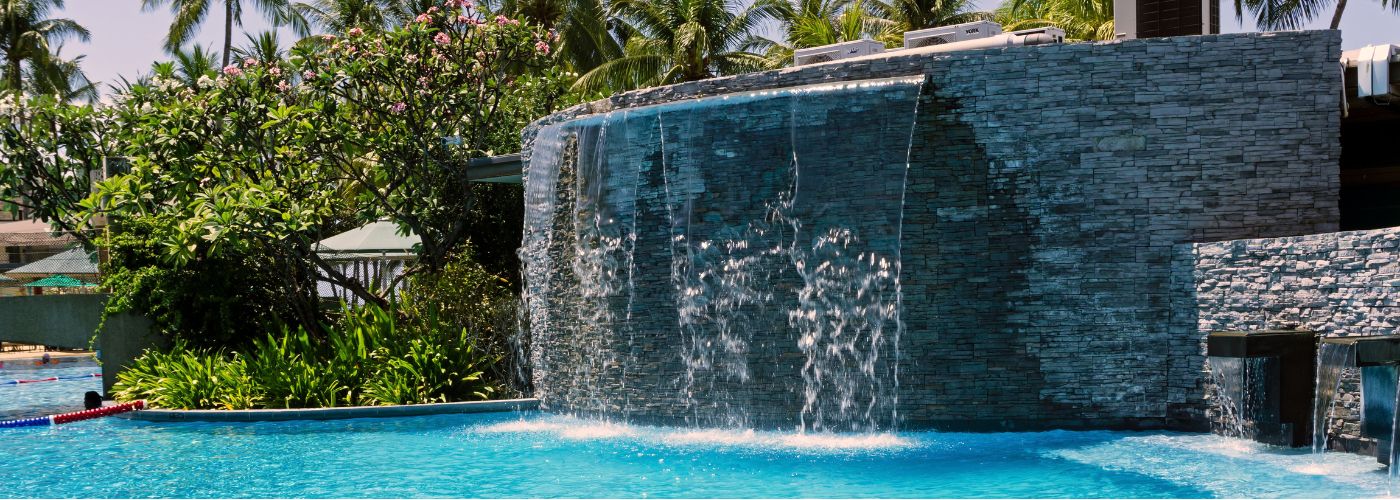
Waterfalls, fountains, spillovers, and other water features can add movement and character to a swimming pool, but they can also change how the pool needs to be cared for. Understanding these changes can make routine maintenance easier and help protect the pool and its equipment.
This article goes over how water features can affect common areas of pool care and maintenance.
Water Features and Their Impact on Pool Care
Many homeowners enjoy adding waterfalls, fountains, sheer descents, and other decorative features to their pool design. While these additions can improve the appearance and atmosphere of the backyard, they also introduce another part of the pool system that needs attention.
Homeowners wondering how do water features affect pool maintenance should consider water movement, chemistry, equipment use, cleaning, and the condition of surrounding surfaces.
A water feature continuously moves water from one area of the pool to another. Depending on the design, water may be pumped through separate plumbing before flowing, spraying, or cascading back into the pool.
This extra movement can affect evaporation and circulation while also exposing additional surfaces to pool water.
Understanding how each feature interacts with the rest of the pool makes it easier to create a maintenance routine that fits the entire system.
Homeowners considering changes to an existing pool can also explore pool remodeling and renovation options that incorporate water features into the overall design.
Increases Water Evaporation and Refill Needs
One important part of understanding how do water features affect pool maintenance is recognizing their effect on evaporation. Features such as fountains and waterfalls expose more water to the surrounding air.
Instead of remaining below the pool’s surface, water is sprayed or moved through the air before returning to the pool.
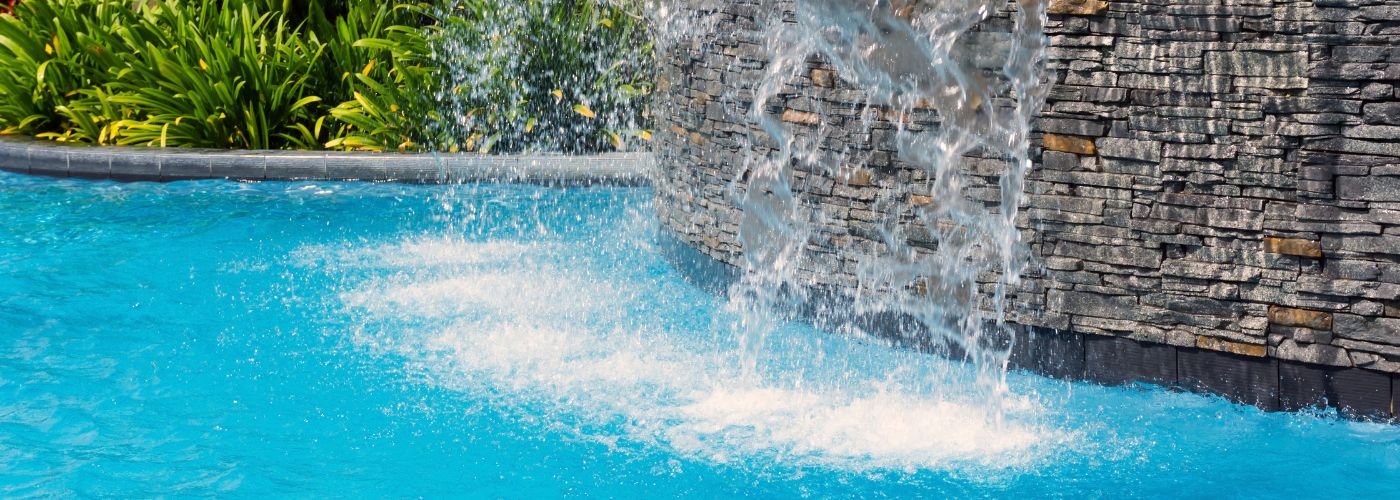
Heat, dry conditions, and wind can increase the amount of moisture that evaporates during this process.
Pool owners may need to check their water level more frequently when decorative features operate for long periods. Refilling the pool when necessary helps maintain the proper operating level for skimmers, pumps, and other circulation equipment.
How quickly the level changes depends on the feature, weather, operating schedule, and size of the pool. Because unusual water loss can sometimes indicate another issue, owners should also understand the difference between evaporation and a possible leak.
The guide covering ways to find a pool leak explains methods for identifying water loss that may go beyond normal evaporation.
Changes Pool Water Chemistry and Balance
Another factor in how do water features affect pool maintenance involves water chemistry. Cascading and spraying water increases its contact with the air, which can influence the pool’s chemical balance.
Aeration can contribute to changes in pH, particularly when a feature creates a large amount of water movement. This does not mean that a fountain or waterfall automatically creates poor water quality, but it can make regular testing more important.
Pool owners should continue checking pH, sanitizer levels, alkalinity, and other important water conditions according to the needs of their pool. Adjustments should be based on actual test results rather than simply adding more chemicals because a water feature is present.
Consistent testing makes it easier to notice small chemistry changes before they become larger maintenance concerns. Water replacement can also affect chemistry because fresh water introduces its own mineral and chemical characteristics.
Homeowners dealing with changing water conditions can read more about how often pool water should be changed in Las Vegas.
Requires Additional Cleaning Around Water Feature Components
When considering how do water features affect pool maintenance, it is also important to look beyond the main swimming area. Water features contain surfaces and openings that can collect dirt, leaves, dust, and other debris.
Waterfalls built from stone can have ledges and textured areas where material settles. Fountain nozzles and narrow openings may also need occasional attention to maintain an even flow of water.
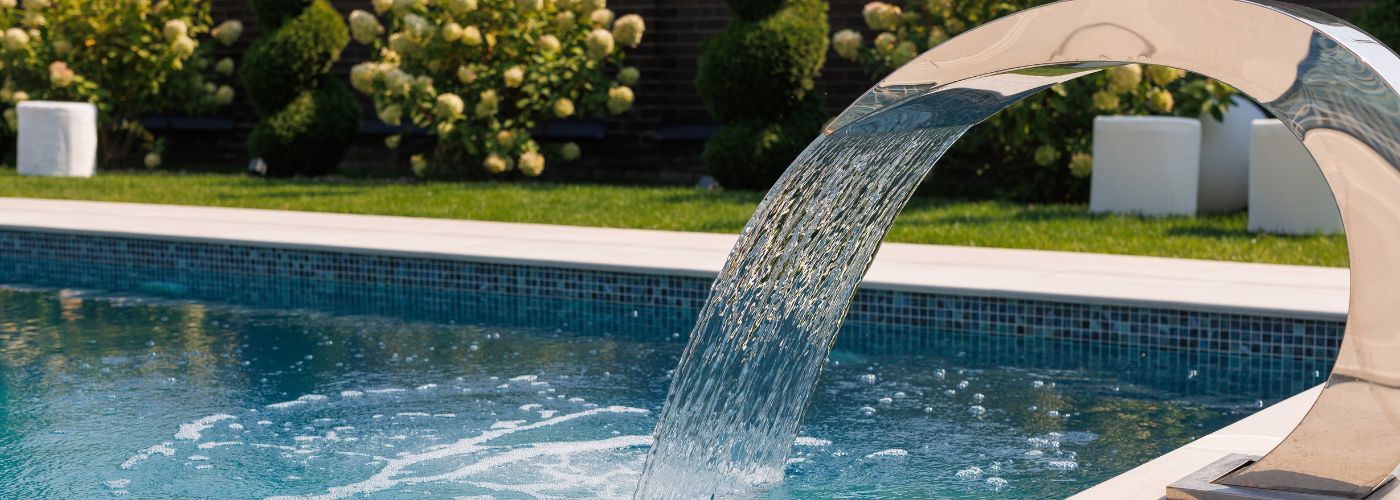
These areas should be included in normal visual inspections and cleaning. Debris around an intake or outlet can restrict water movement, while dirty surfaces can take away from the appearance of the feature.
Depending on the material, cleaning methods may need to be gentle enough to avoid damaging stone, tile, plaster, or decorative finishes. The goal is not simply to keep the main pool clean but to maintain every area that regularly comes into contact with circulating water.
Regular attention to smaller components can prevent dirt and debris from becoming harder to remove over time. Cleaning needs can vary significantly between a simple spillover and a large decorative fountain.
Homeowners can review different pool fountain designs to see how features such as wall mounted fountains, spillovers, floating fountains, and sculptural fountains use water differently.
Greater Demand on Pool Pumps and Filtration Systems
Understanding how do water features affect pool maintenance also requires looking at the equipment responsible for moving the water. A waterfall, fountain, or similar feature needs sufficient water flow to operate correctly.
Depending on the pool design, that movement may come from the main circulation system or equipment configured specifically for the water feature.
Either arrangement introduces additional components or operating demands that should be considered during routine maintenance.
Proper water flow is important because restricted plumbing, dirty filters, blocked openings, or equipment problems can change how a water feature performs.
A fountain that suddenly produces a weaker stream or a waterfall with uneven flow may be showing signs that something within the circulation path needs attention.
Checking these changes early can help pool owners determine whether the feature itself needs cleaning or whether another part of the circulation system should be inspected.
Operating schedules are another consideration. Decorative water features do not necessarily need to run continuously, and the appropriate schedule depends on the equipment, feature design, and how the pool is used.
Pumps, filters, valves, and plumbing should all be maintained according to their specific requirements.
Cleaning equipment also plays an important part in overall pool care, and homeowners comparing maintenance methods can review the differences between automatic and manual pool vacuums.
Increased Risk of Mineral Buildup and Scale
The final consideration in how do water features affect pool maintenance is mineral buildup. Pool water contains dissolved minerals, and these minerals can remain on a surface when water evaporates.
Because waterfalls, fountains, and spillovers constantly wet exposed surfaces, they can develop visible deposits over time. The problem may be especially noticeable around edges where water repeatedly flows and dries.
Scale can appear as a rough or light colored deposit on tile, stone, fountain openings, or other surfaces. The rate at which buildup develops depends on factors such as water chemistry, mineral content, evaporation, and the materials used around the feature.
Allowing deposits to remain for long periods can make them more difficult to address later. Routine inspections help pool owners notice mineral deposits while they are still relatively small and easier to manage.
Maintaining balanced water chemistry is an important part of reducing unnecessary scale formation. The surfaces surrounding the feature should also be checked regularly so deposits can be addressed with methods appropriate for the material.
Abrasive or unsuitable cleaning products can damage certain finishes, so care should be taken before treating decorative stone, tile, or plaster.
With consistent cleaning, balanced water, and proper equipment care, water features can remain an attractive part of the pool without making routine maintenance unnecessarily difficult.
More to Read
How Do Water Features Affect Pool Maintenance?
Waterfalls, fountains, spillovers, and other water features can add movement and character to a swimming
Nov
What Causes Cracks in Swimming Pool Surfaces?
Cracks in a swimming pool can appear for several reasons, ranging from construction problems to
Oct
What To Consider Before Adding A Fire Feature Near Your Pool
A fire feature can completely change the look and feel of an outdoor living space,
Sep